Sunday, 18 October 2015

Whatever happened to young female black characters

I read widely. I enjoy all kinds of books whether they happen to be by black or white or Asian authors.

However this week I was faced with the truth that I loved books with characters that looked liked me.  As a teenager I read books by Tsi, Degerambe - Nervous Conditions and felt kinship with the character, her confusion mirrored my own.  I read Knoughts and Crosses and I could vision myself as Sephy. In Purple Hibiscus, I was back in my native country navigating the pitfalls of growing up.
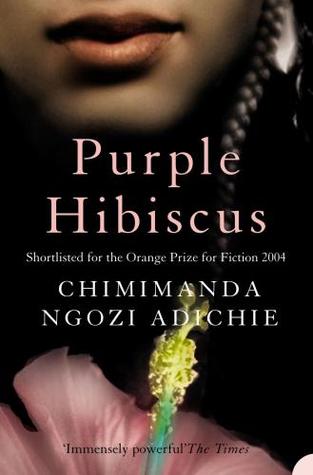
Recently though I've struggled to find authors who write about women for black women my age i.e. in their twenties who aren't affected by Third World poverty or war, women who are navigating the job market, men and such. It is as if our stories have no value. 

I read a book recently, a romance, it wasn't particularly interesting by a white author, I found myself very angry at her description of a passerby as simple “a black woman”.  If a white man had walked past, would she have described him as “a white man”. Also her constant use of porcelain skin annoyed me. Her main characters had beautiful porcelain skin, like a tea cups. She found so many ways of describing white characters, but could only find one word to describe a black character. 

Anyway where are all the black female characters? 

The Newlyweds

Amina met George online. Within months she has left her home in Bangladesh and is living in George's house in the American suburbs. Theirs is a very twenty-first century union, forged from afar yet echoing the traditions of the arranged marriage.
But as Amina struggles to find her place in America, it becomes clear that neither she nor George have been entirely honest with each other. Both have brought to the marriage a secret - a vital, hidden part of themselves, which will reveal who they are and whether their future is together or an ocean apart.

Wednesday, 14 October 2015

Marlon James wins the Man Booker Prize

Marlon James has won this year's Man Booker prize for A Brief History of Seven Killings. He is the first Jamaican writer to ever win the prize. Congratulations Mr. James!

Synopsis from The Man Booker Prize


On 3 December 1976, just weeks before the general election and two days before Bob Marley was to play the Smile Jamaica concert to ease political tensions, seven men from West Kingston stormed his house with machine guns. Marley survived and went on to perform at the free concert. But the next day he left the country and didn’t return for two years.


Inspired by this near-mythic event, A Brief History of Seven Killings takes the form of an imagined oral biography, told by ghosts, witnesses, killers, members of parliament, drug dealers, conmen, beauty queens, FBI and CIA agents, reporters, journalists, and even Keith Richards' drug dealer. The story traverses strange landscapes and shady characters, as motivations are examined – and questions asked. 
(http://themanbookerprize.com/books/brief-history-seven-killings) 

http://www.theguardian.com/books/2015/oct/13/marlon-james-wins-the-man-booker-prize-2015

Tuesday, 1 September 2015

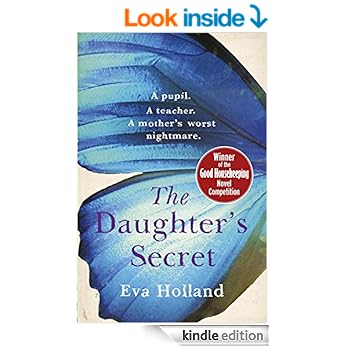
The Daughter's Secret

My daughter is a liar. A liar, liar, liar. And I'm starting to see where she gets it from.

When Rosalind's fifteen-year-old daughter, Stephanie, ran away with her teacher, this ordinary family became something it had never asked to be. Their lives held up to scrutiny in the centre of a major police investigation, the Simms were headline news while Stephanie was missing with a man who was risking everything.

Now, six years on, Ros takes a call that will change their lives all over again. He's going to be released from prison. Years too early. In eleven days' time.

As Temperley's release creeps ever closer, Ros is forced to confront the events that led them here, back to a place she thought she'd left behind, to questions she didn't want to answer. Why did she do it? Where does the blame lie? What happens next?


Tuesday, 16 June 2015

First They Came

Marianne Jean-Baptiste was interviewed recently by  for the Guardian and at the end of the interview she quotes this wonderful poem. I thought the interview was intriguing and insightful. If you think so too, leave a comment below.

First They Came

First they came for the Communists
And I did not speak out
Because I was not a Communist
Then they came for the Socialists
And I did not speak out
Because I was not a Socialist
Then they came for the trade unionists
And I did not speak out
Because I was not a trade unionist
Then they came for the Jews
And I did not speak out
Because I was not a Jew
Then they came for me
And there was no one left
To speak out for me - Martin Niemoller 


Read full interview - http://www.theguardian.com/stage/2015/jun/15/marianne-jean-baptiste-secrets-and-lies-british-movies


""It’s not this sob story. I had a choice. I could have stayed and fought it out, but I thought you know what, this is madness, it’s like fishing in a river and seeing people grabbing fishes upstream and you’re still down there going, ‘This is where I need to be, this is my spot.’ You fucking walk up stream and you catch your fish. I’m a member of the African diaspora, my parents left the Caribbean and came to London for a better life. We moved. And you print that, with the expletives.
"I ask if she suffered because she wasn’t a conventional dolly bird.

“How dare you! ‘I’m not not a bloody dolly bird!’ I am!”"


Monday, 15 June 2015

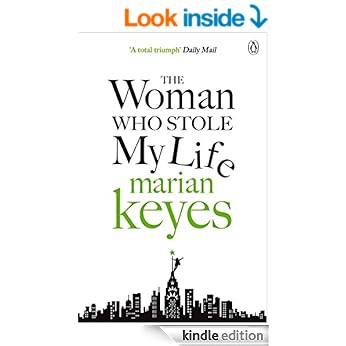
The Woman Who Stole My Life


Synopsis

One day, sitting in traffic, married Dublin mum Stella Sweeney attempts a good deed. The resulting car crash changes her life.

For she meets a man who wants her telephone number (for the insurance, it turns out). That's okay. She doesn't really like him much anyway (his Range Rover totally banjaxed her car).

But in this meeting is born the seed of something which will take Stella thousands of miles from her old life, turning an ordinary woman into a superstar, and, along the way, wrenching her whole family apart.

Is this all because of one ill-advised act of goodwill? Was meeting Mr Range Rover destiny or karma? Should she be grateful or hopping mad?

For the first time real, honest-to-goodness happiness is just within her reach. But is Stella Sweeney, Dublin housewife, ready to grasp it?

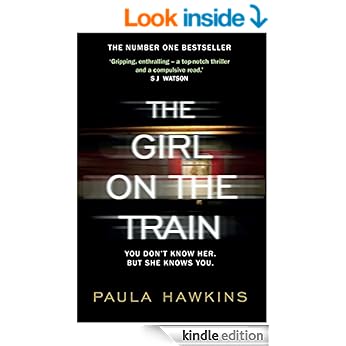
The Girl On The Train


Synopsis

Rachel catches the same commuter train every morning. She knows it will wait at the same signal each time, overlooking a row of back gardens. She’s even started to feel like she knows the people who live in one of the houses. ‘Jess and Jason’, she calls them. Their life – as she sees it – is perfect. If only Rachel could be that happy.


And then she sees something shocking. It’s only a minute until the train moves on, but it’s enough.

Now everything’s changed. Now Rachel has a chance to become a part of the lives she’s only watched from afar.

Now they’ll see; she’s much more than just the girl on the train…